
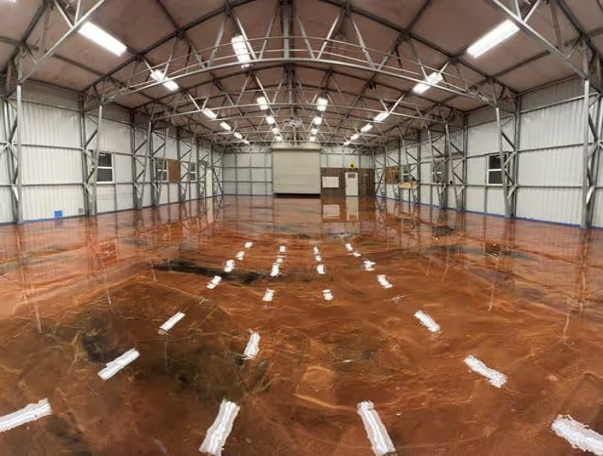
Factory managers often think that any standard gray paint will protect a busy warehouse floor from heavy machinery traffic. The truth is that heavy forklifts and sudden chemical spills will destroy a cheap hardware store coating within a week. You need a thick, commercial-grade chemical barrier that bonds directly into the pores of the concrete slab. Getting a professional team to grind down the top layer ensures the liquid resin locks in deeply without lifting up later. Taking time to select the right thickness makes a massive difference for long-term durability.
Upgrading Local Distribution Warehouses
Heavy pallet jacks and constant shipping traffic will quickly grind raw, unprotected concrete down into fine, irritating white dust. Choosing a premium industrial epoxy flooring Corona CA system completely seals the surface to keep your air clean and your inventory spotless. This dense chemical layer handles the extreme weight of massive storage racks without cracking or showing signs of early structural failure. You can even choose bright, light-reflecting colors to make the entire workspace safer and much brighter for your evening shift employees. Cleaning up leaked battery acid or greasy hydraulic fluid becomes incredibly simple with a basic squeegee.
Preparing Concrete Surfaces Correctly
You must use a heavy walk-behind diamond grinder to strip away old sealers, oil stains, and loose debris before mixing chemicals. Slapping new resin over a dirty or slick concrete surface will only cause major bubbling and peeling down the road. This mechanical preparation phase requires a lot of physical effort and creates heaps of fine concrete dust that must be vacuumed. Wearing a proper respirator mask keeps your lungs safe while you work across the entire open warehouse floor area. Taking this tedious step ensures the liquid resin forms a permanent mechanical bond with the underlying slab.
Managing Complex Chemical Applications
Every industrial epoxy flooring corona comes in two separate heavy barrels that require exact measurement before you start mixing them together. If you rush the blending process or guess the ratios, the final floor coating will remain sticky and useless forever. The intense chemical reaction creates a lot of internal heat, giving you only about twenty minutes to spread it. Working in small, organized teams prevents the wet edges from drying out and creating ugly, uneven seam lines across the floor. Using a specialized spiked roller helps release any trapped air bubbles before the thick resin hardens completely.
Selecting Proper Application Tools
Cheap paint rollers from the corner store will shed tiny loose hairs directly into your expensive, wet floor coatings. You need to buy lint-free, phenolic core rollers that are specifically manufactured to handle thick, high-solids industrial resins. Run a piece of strong duct tape over the roller cover to remove any loose manufacturing fibres before dipping. Keep a consistent wet edge while rolling out the material to prevent dark overlap lines from showing up later. Throw the used tools away immediately because these heavy chemical resins cannot be washed out with water.
Enhancing Safety and Slip Resistance
Smooth, high-gloss floors look incredibly beautiful, but they become highly dangerous slip hazards when a little oil spills during maintenance. Mixing a specific amount of coarse aluminium oxide or clean silica sand into the wet top layer solves this problem. You want a uniform, rough texture across the main walking paths without making the floor impossible to mop clean daily. Dropping the aggregate evenly by hand takes a lot of practice to avoid creating big, thick clumps in random spots. Sweeping away the loose leftover grit after everything dries leaves a clean, professional, and safe workspace.
Repairing Deep Slab Cracks
You must fill every single hairline crack and deep gouge with a dense epoxy gel patch before pouring the main self-leveling base. Leaving deep holes untreated means the final glossy surface will mirror those exact physical imperfections right up to the top coat. Use a stiff wire brush to clean out loose debris from inside the cracks before applying any filler material. Let the patching compound cure completely hard overnight, then grind the surface down entirely flat with your machinery. This careful repair work ensures the final industrial top coat looks perfectly smooth and completely level.
Conclusion
Selecting a heavy-duty seamless surface treatment remains the absolute best way to safeguard your facility’s concrete from long-term structural failure. The expert application crew at evolveepoxy.com utilizes advanced industrial equipment and premium commercial resins to deliver outstanding results across the entire Inland Empire region. Rushing through the mechanical grinding phase or choosing low-grade alternative paints always results in an uneven finish that flakes away under heavy vehicle traffic. Investing in a resilient, custom-engineered coating system ensures your manufacturing hub or local warehouse remains clean, safe, and fully operational for many decades. Please contact our industrial service desk today to receive a comprehensive project estimate for your facility.